
Just 605 days ago, on March 27, 2022, the Canadian men’s national team thoroughly dominated Jamaica at Toronto’s BMO Field in a result that officially punched their ticket to the 2022 FIFA World Cup. It was a monumental moment for a program that had long been starved of a true moment to celebrate. Tuesday night, at the same venue, against the same opponent, couldn’t have been further away from that celebratory atmosphere. Instead, a second-half capitulation against the Reggae Boyz led to a 3-2 loss that not only meant elimination from the 2023-24 Concacaf Nations League but also missing out on a chance to automatically qualify for the 2024 Copa América. Ultimately, it could be a similarly monumental moment for the national team, because it forces the program and the players to narrow their focus in a way it has seemingly lacked since qualifying for Qatar. For the past 605 days, it has felt like the Canadian men’s national team is still trying to build on what they accomplished during 2022 World Cup qualifying. After last night’s loss to Jamaica, it has never been more clear that the focus and mentality need to shift exclusively to building toward the 2026 World Cup. The most obvious actionable step in this change of approach is investing in players who will or could be part of that 2026 squad. Since the 2022 World Cup ended, it has felt like players are still being called up for Canada based on what they have done for the national team, not what they could do over the next few years. While it might not seem like there are ready-made replacements for many of the key veterans who helped Canada reach Qatar — players like Junior Hoilett, Mark-Anthony Kaye, Jonathan Osorio, Samuel Piette, Milan Borjan and Steven Vitória — it is impossible to know that without providing opportunity. Think of how many now key Canadian men’s national team players first pulled on the shirt when they were incredibly raw talent, and how quickly they were able to use those experiences to expedite their growth as a player. Ismaël Koné, who was one of Canada’s better players on Tuesday night, is a perfect example having made his national team debut after just a handful of starts with CF Montréal. Richie Laryea, Alistair Johnston, Kamal Miller and Tajon Buchanan are just a few others.
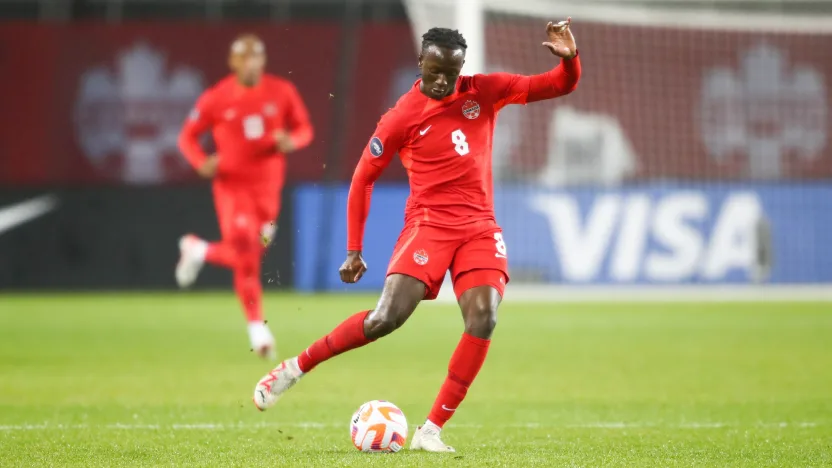
With no official FIFA windows before Canada’s last chance to qualify for Copa América, against Trinidad and Tobago on March 23 in Frisco, Texas, this makes having a January camp more critical than ever. This would allow the program to look at its extended player pool in a way that hasn’t been done since before the COVID-19 pandemic. While that won’t include matches against top opposition, it could be an important chance to integrate or re-integrate a number of the young North American and Scandinavian-based players who have been waiting for their opportunity. The likes of Jayden Nelson, Lukas MacNaughton, Jacob Shaffelburg, Joel Waterman, Ali Ahmed, Kobe Franklin and Halifax Wanderers defender Daniel Nimick are all worthy of a look, to name a few. Calling up fewer experienced veterans, however, also means it is time for the national team’s young core of players to start stepping up as leaders. One player in particular who has stood out in this regard, particularly during this camp, is Stephen Eustáquio. The 26-year-old midfielder for Porto was accountable, articulate and direct in his dealing with the media and has proven himself to be Canada’s most important player over the past few years. He might now be the frontrunner for the next national team captain. As for the man leading this group on the touchline going forward, it was ultimately interim manager Biello’s decision to call up such a veteran-heavy roster for this camp. In some ways, it was an understandable decision given the importance of these matches and the lack of preparation. Having so many Concacaf experience players is probably a big reason for Canada’s success in the first leg under difficult circumstances in Jamaica.

Biello’s closeness to this group might ultimately be his undoing. For this team to move on from 2022, and build towards 2026, it feels like fresh perspective is needed. Someone who can come in and objectively evaluate the talent currently available, as well as extrapolate what role those players might be playing, if any, in a few years’ time. Some tough conversations are going to be needed going forward, particularly with players who have become legends within the national team and played a big part in raising the bar to where it is today. Sometimes, after all, competitors need help getting out of their own way before they overstay their welcome and start undoing all of the positive sentiment they have built up. Unquestionably those players forever deserve to be celebrated for what they did to change the history of the sport in this country. Even if they haven’t been able to truly build on their 2022 World Cup qualification, the lessons and experiences that Canadian soccer learned in qualifying for, and playing at, the Qatar World Cup are irreplaceable. As far as experiences go before they reach a World Cup on home soil in 2026, however, there would be none bigger than the 2024 Copa América. The chance to play against fully motivated world-class opposition in a tournament setting just isn’t going to come otherwise for Canada. Tuesday’s loss instantly makes March one of the biggest matches in the program’s history, and shortens the timeline on some of these aforementioned roster and personnel decisions. Playing, and ideally performing, at a Copa América tournament is also one of the few high-visibility opportunities that the men’s national team have to rebuild mainstream interest and belief before 2026. Thursday, Nov. 23 will mark a year to the day that Canada returned to the world stage in a 1-0 loss to Belgium. Despite that result, it was a day of optimism, one where Canada played against world-class talent and did themselves proud. Canada now have roughly 933 days to make sure that when they step out onto the pitch at the 2026 World Cup there is a similar belief among this team and its fans. That becomes the key mission. The clock is ticking to 2026, and Tuesday’s loss needs to be a significant wake-up call to that fact at every level of the program.